RIVERRIVER

Getting started

River gives you a page for each day, and space to develop what you write. Here is how to begin.

1 · Start here

Write on today’s page

Open River and start typing on Today. A thought, something you noticed, a few lines you want to keep — you don’t need to name a note or choose a folder first.
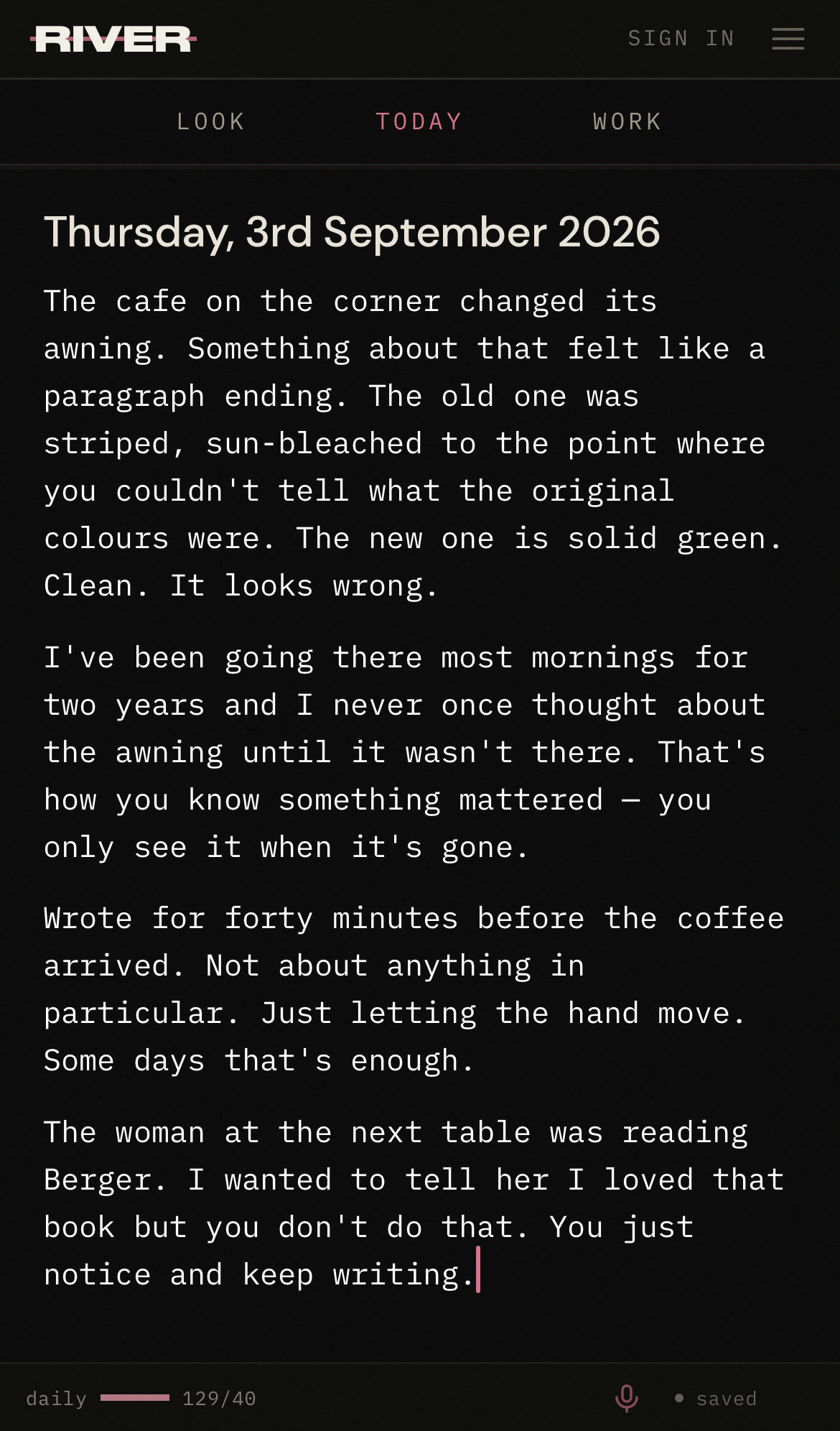
Thursday’s page in River, with several paragraphs of example daily writing.

You can try this without an account. Until you sign in, your writing stays in this browser on this device.

2 · Come back

Return to an earlier day

Your writing stays on its date. The Current is the view where you scroll through those daily pages: earlier days are above, later days below. You can return to a day and keep writing there, and double-tap the date to come back to today.

Twenty seconds: scroll up through earlier days, back to nearly a fortnight ago, then double-tap the date to come home to today. Days with nothing written stay as empty pages.
Find a day with the calendar

Tap the date above your writing to open the calendar, then choose a day.
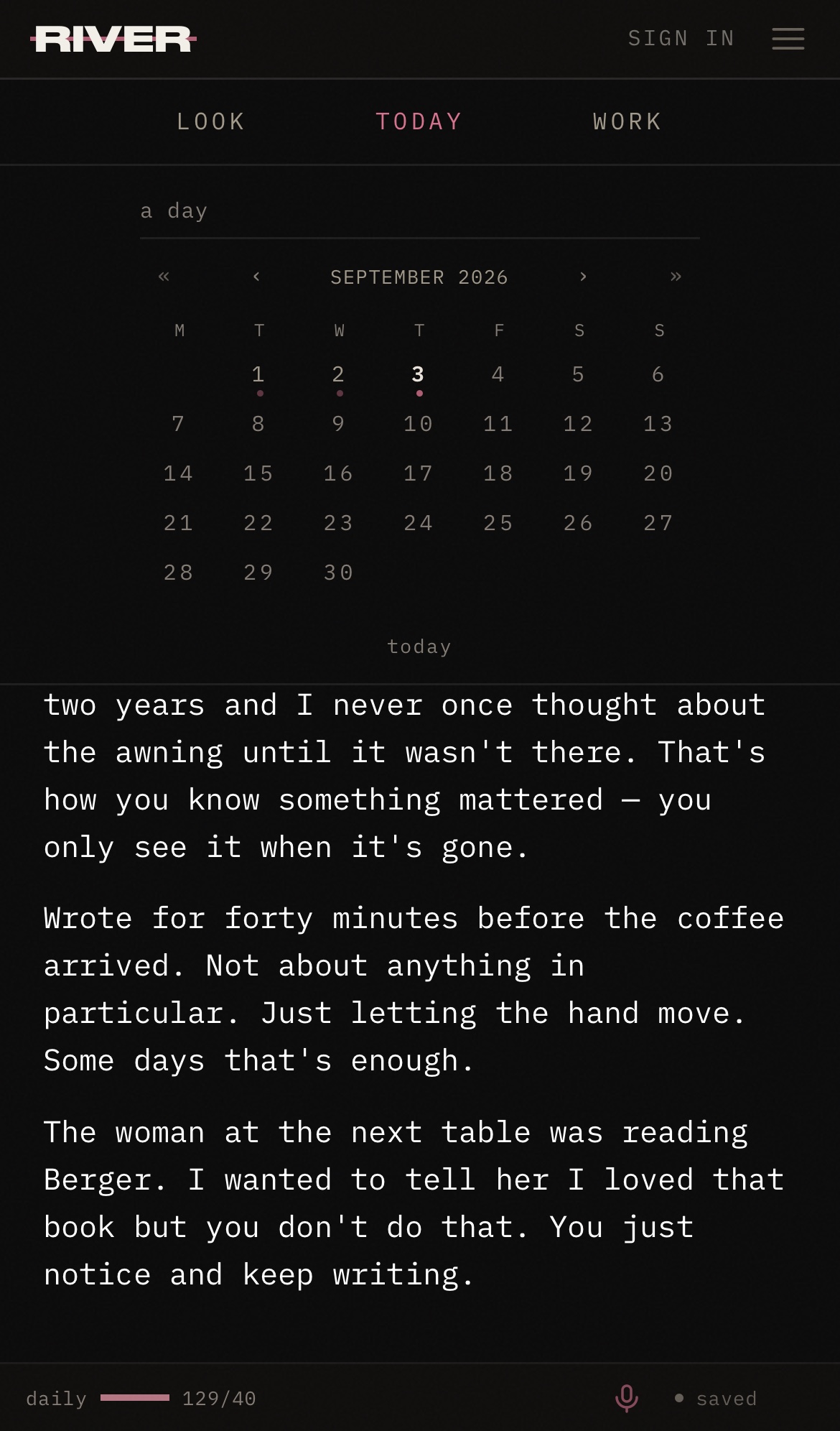
September’s calendar open above the writing. Dots mark days with writing.

3 · Develop an idea

Send a passage to a named note

When something you have written or said deserves more attention, select the passage and choose send to… from the menu. Pick an existing note or make a new one: the passage is added there, and the original stays on its daily page. Then carry on with the day, and come back to the piece when you are ready. Below, a sentence from Thursday goes to a new note named the awning.

See each step

In the real app · example writing
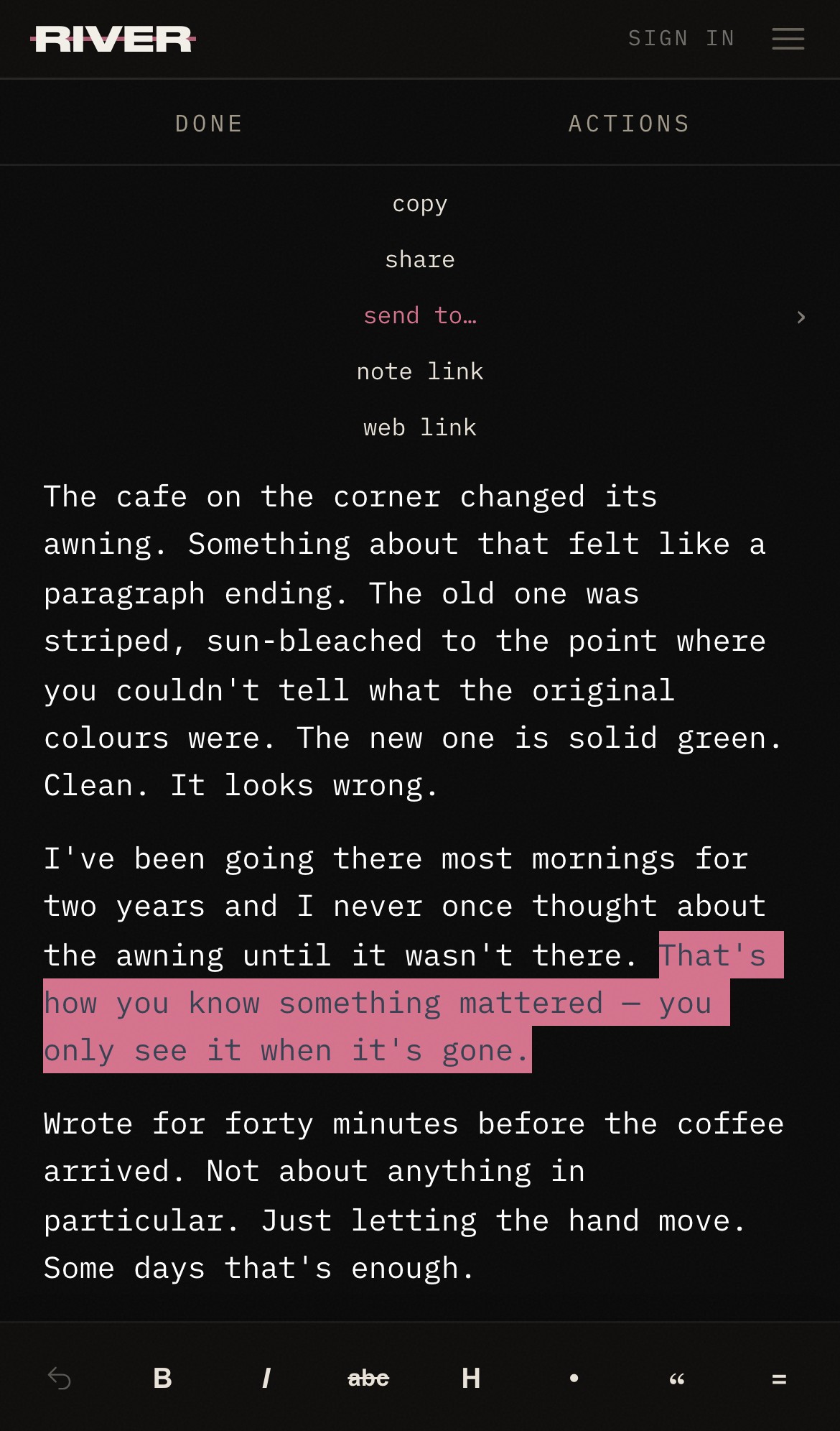
Select the words you want to carry forward. On a phone, tap Actions. On desktop, right-click the selection. Choose send to…
Thursday's page in River with one sentence selected, and the menu open showing send to…

When you want to do more

You can come back to these as you need them.

Record a thought

Use the microphone in the bottom bar to record. Allow microphone access when asked. Keep the recording on the page, then choose transcribe if you want the words too. The first use downloads the transcription model to your device and takes longer; later transcriptions use that local model.
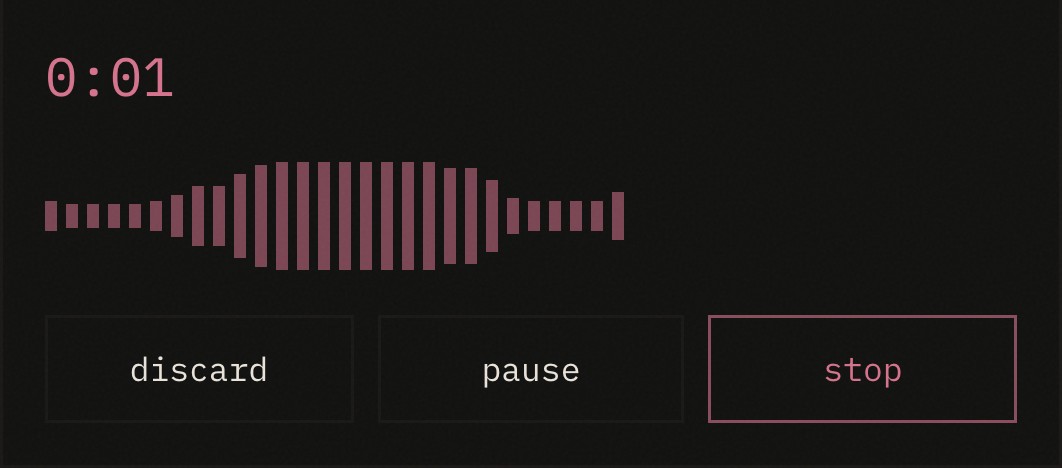
Tap the microphone and speak. Tap stop, listen back if you like, then keep.
River’s voice recorder while recording: elapsed time, live waveform, pause and stop.
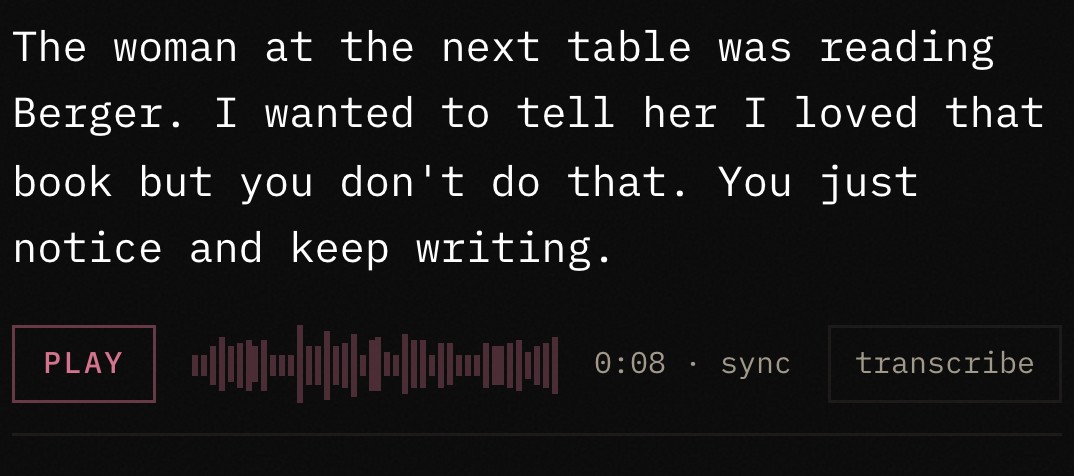
The recording stays in the page. Tap play to hear it or transcribe to turn it into words.
A saved eight-second voice scrap beneath a paragraph, with its waveform, play and transcribe controls.

Example captured with a test recording.

Gather notes in a project

Work is where you find named notes. You can gather related notes into a project as something develops — a set of songs, for example, or a longer piece of writing. Notes outside a project appear under Loose.
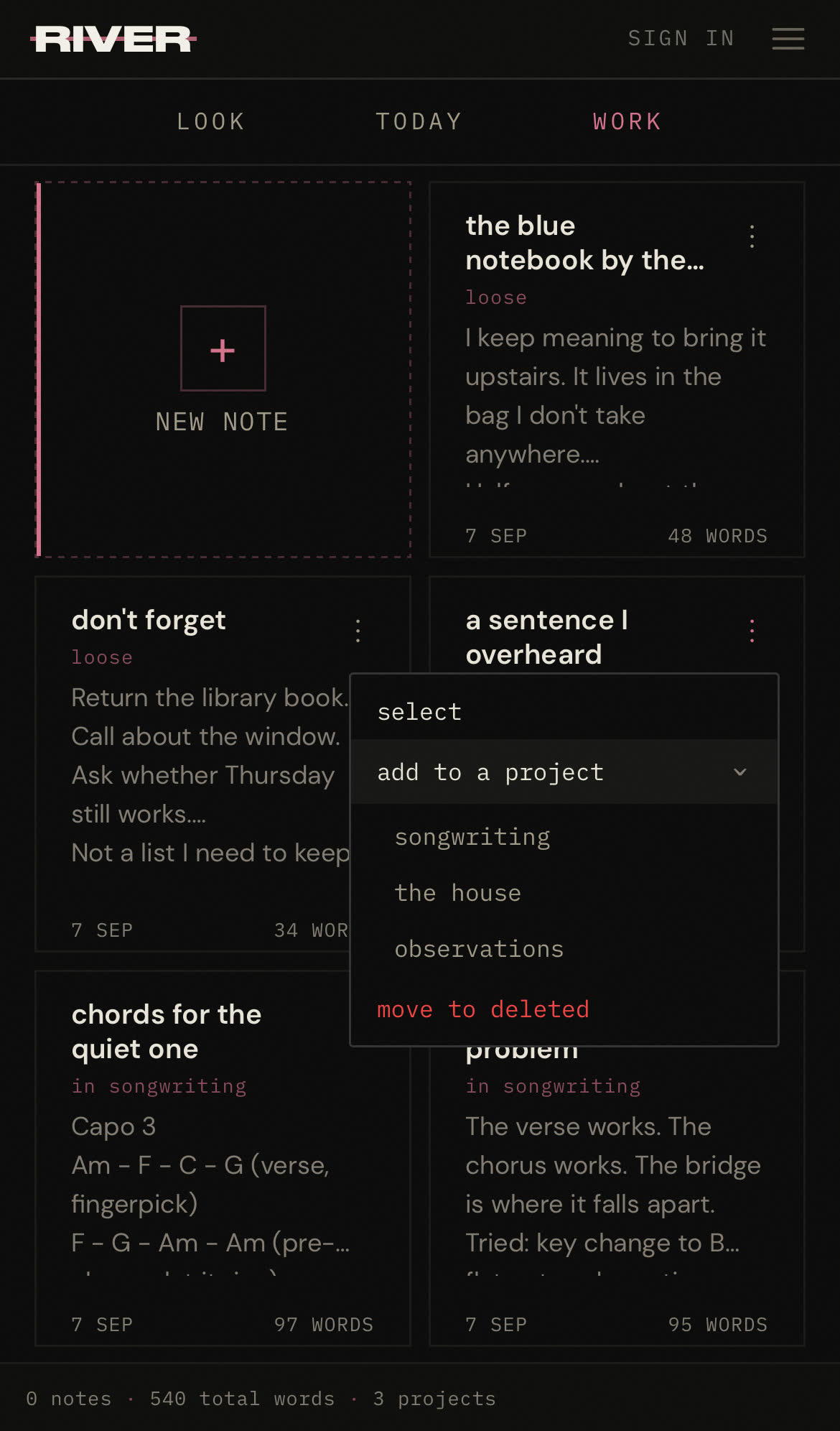
Open Work, then choose + name a project. To file a note, open its menu — ⋮ on a phone, right-click on a computer — and choose add to a project.
In Work, the actions menu is open on the loose note a sentence I overheard, with add to a project expanded to show songwriting, the house and observations.
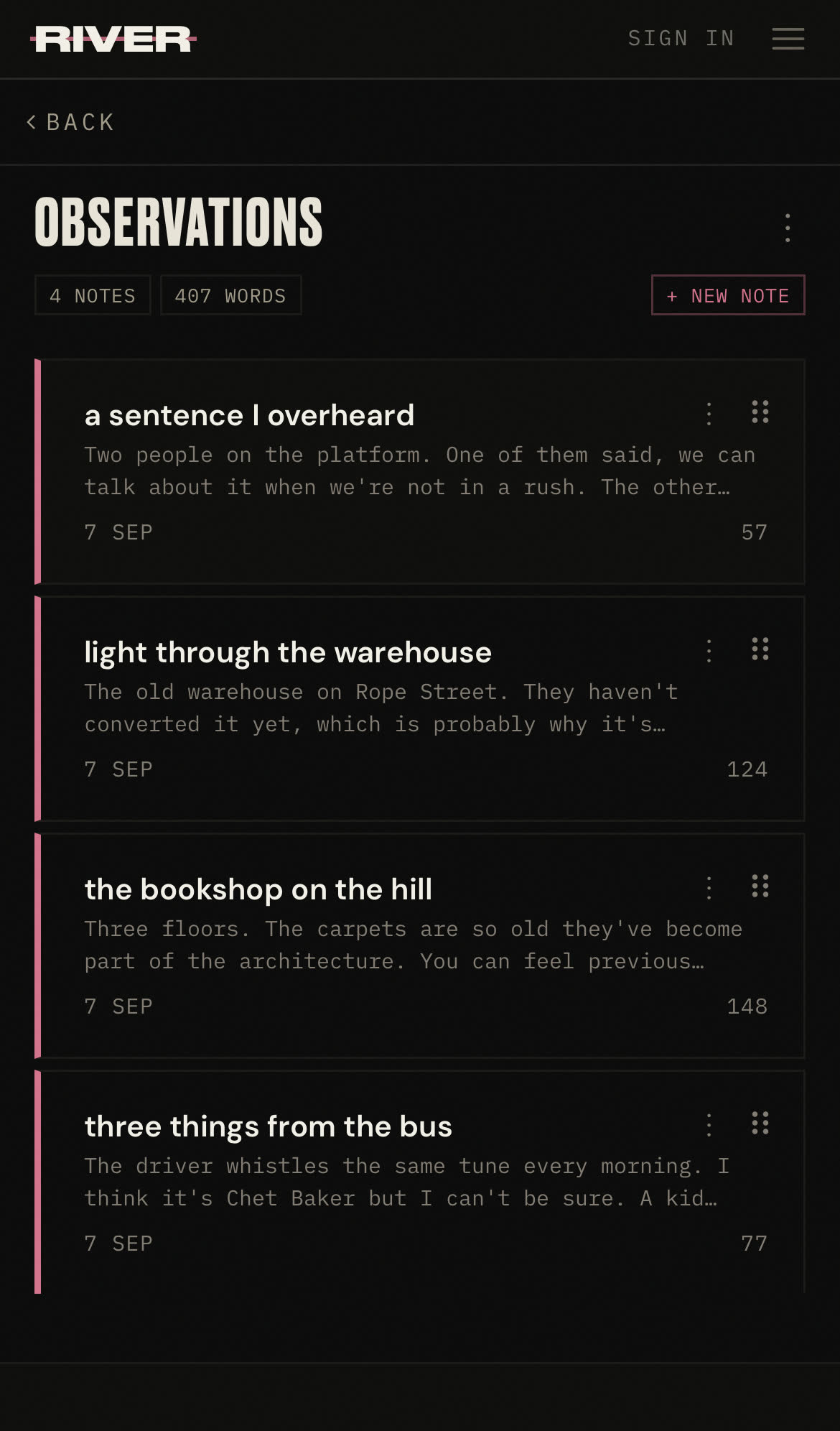
Open the project in Work to see what is in it. Here, a sentence I overheard has just joined observations.
The observations project open in Work, with four notes and a preview of each.
Add a photograph

Sign in first: photographs are kept with your account. Then put your own photograph into the writing, or search for one from Unsplash inside River. River includes the credit for an Unsplash photograph.
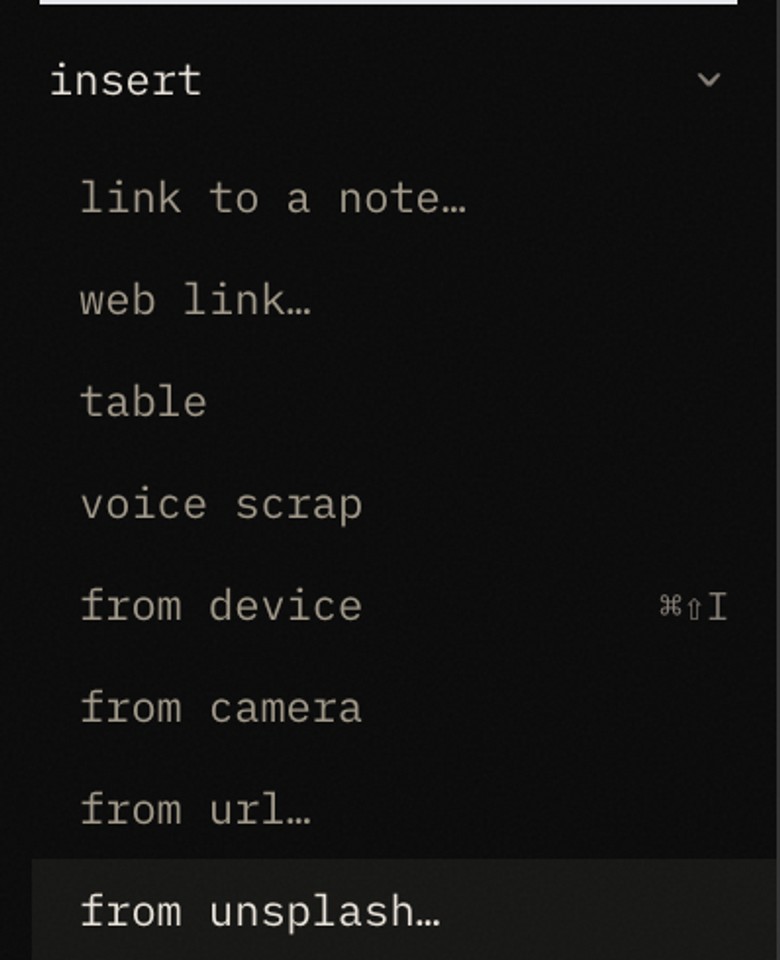
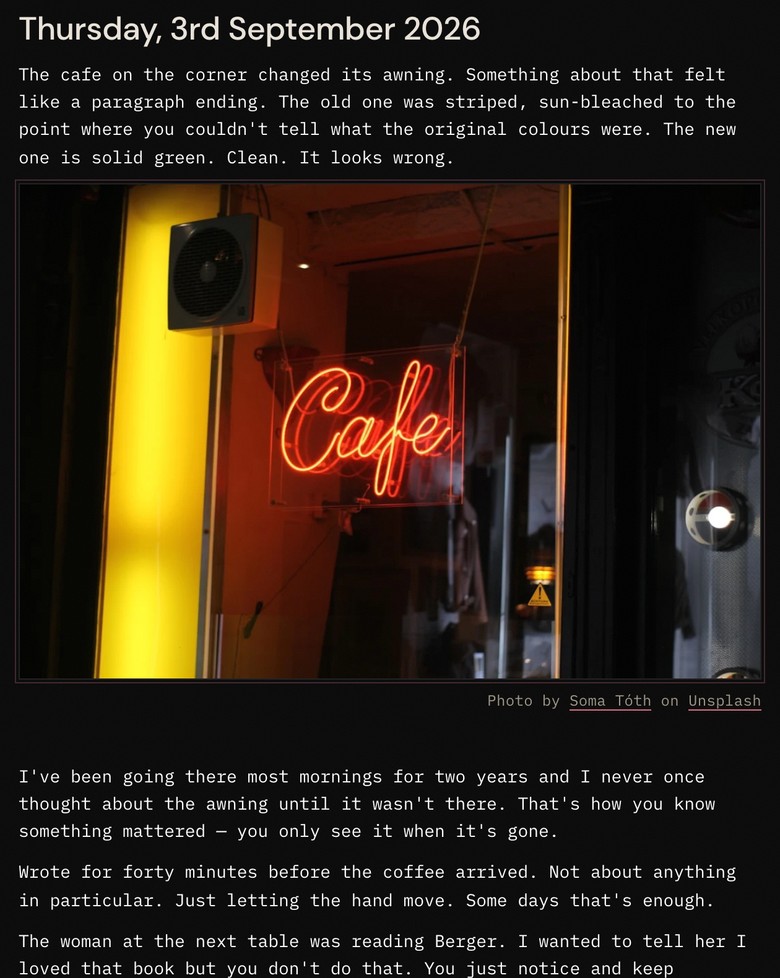
Put the cursor where the picture should go. On a computer, right-click and open insert. Choose from device for your own photograph, or from unsplash… to search without leaving the page.
River's editor menu open on the page, with insert expanded: link to a note, web link, table, voice scrap, from device, from camera, from url and from unsplash; from unsplash is highlighted.
The photograph sits where the cursor was, between the paragraphs, with the credit written for you.
Thursday's page with a photograph between the first and second paragraphs — an amber neon café sign against a dark window — with its Unsplash credit beneath.
Develop another draft

Stages lets you make another version of a piece while keeping the earlier draft. Open a note from one of your projects and the bottom bar offers it; you can move between the versions as you work.
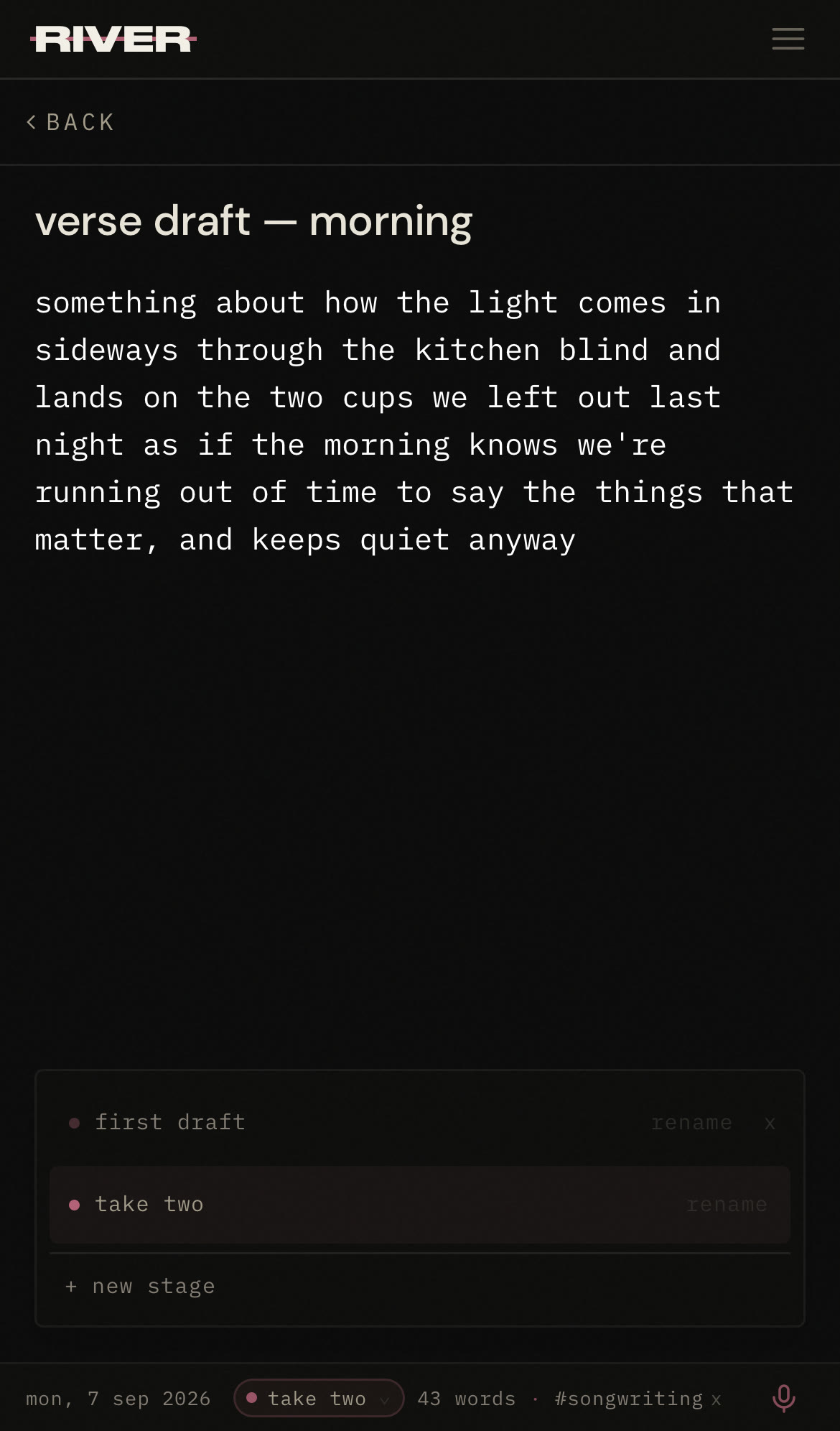
The bottom bar names the draft you are in — here, take two. Tap it to see every draft of the piece: choose first draft to go back to it, or + new stage to begin the next.
A note called verse draft — morning, open at its second draft. The stages menu in the bottom bar lists first draft and take two, with take two marked as current, and offers + new stage.
Print a note

Print gives your note a layout for paper, so you can read it away from the screen or give someone a copy.
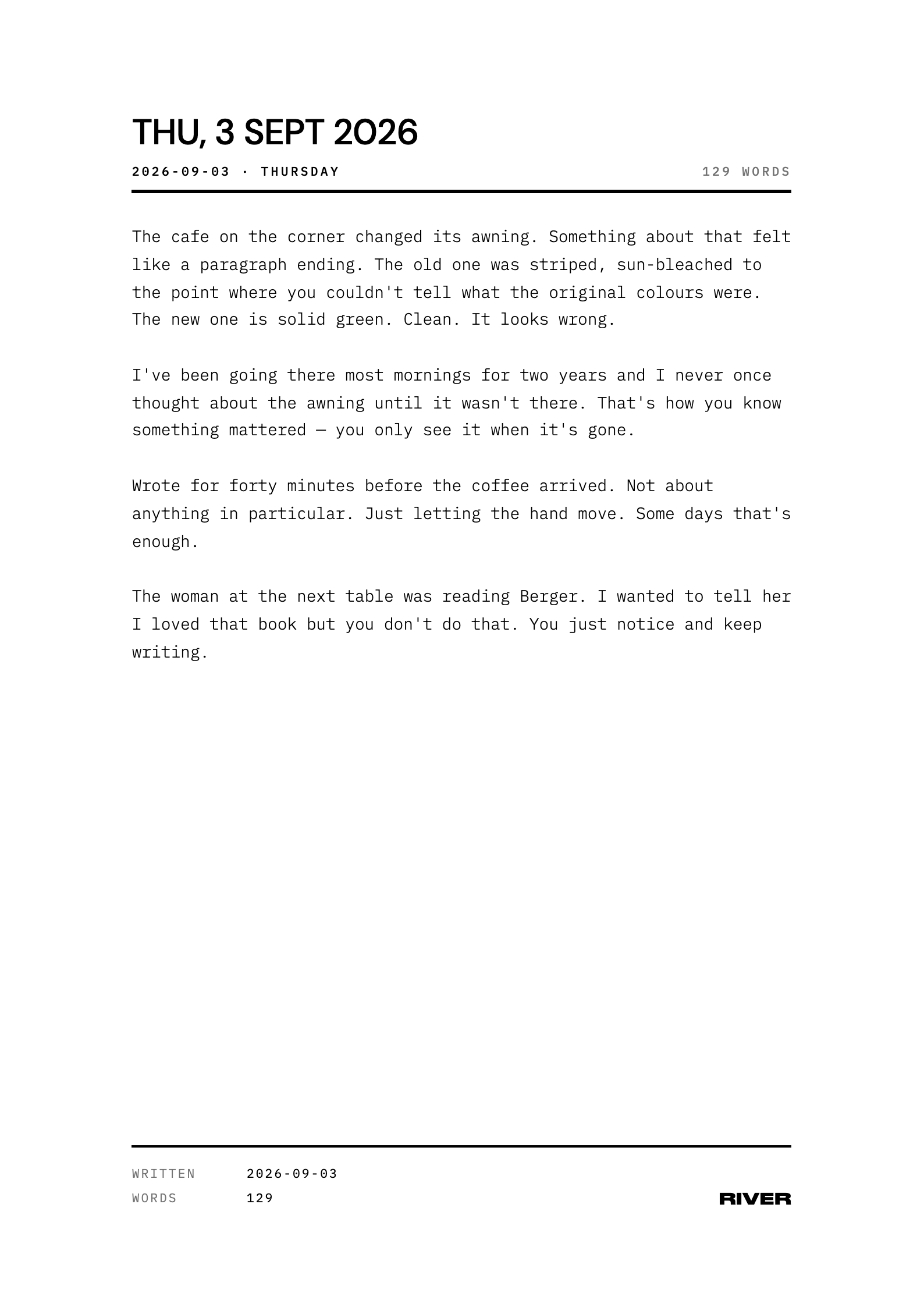
Thursday’s page, as it prints. Open the note actions and choose print; on a computer, right-click in the writing.
An A4 sheet as River prints it: the date as a heading, four paragraphs set in a typewriter face, the word count and the River mark at the foot.
Let someone read a note

Sign in, open the note actions and choose share. River makes a link to that note — the one note, not your collection — for someone to read.

The note you choosethe awning
That’s how you know something mattered — you only see it when it’s gone.
A link for someone elseRead this note
Sharing a note gives someone a way to read that note, rather than access to your collection.
Take your writing with you

Export a note, or your collection, as files you can keep outside River. Markdown and Word are available.
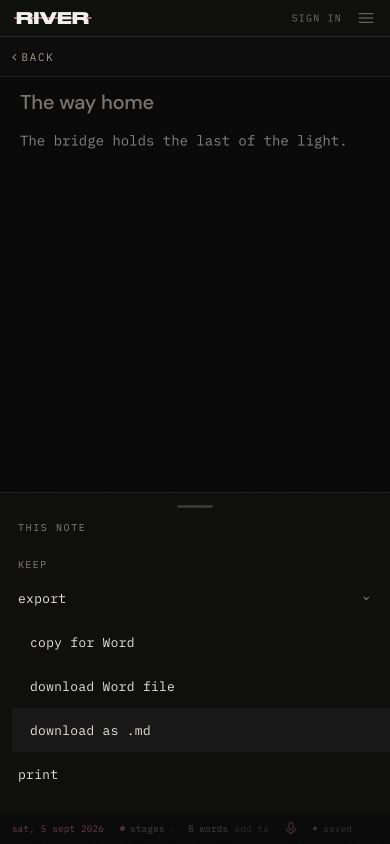
Open the note actions and expand export. Choose a Word file to continue editing elsewhere, or Markdown for a plain-text copy.
Export offers copy for Word, download Word file and download as Markdown.
Find something you wrote

Use search when you remember a word or phrase; it looks through your notes and your days on the device itself. Use the Current when you remember the day. Open Work when you want a named note or project.
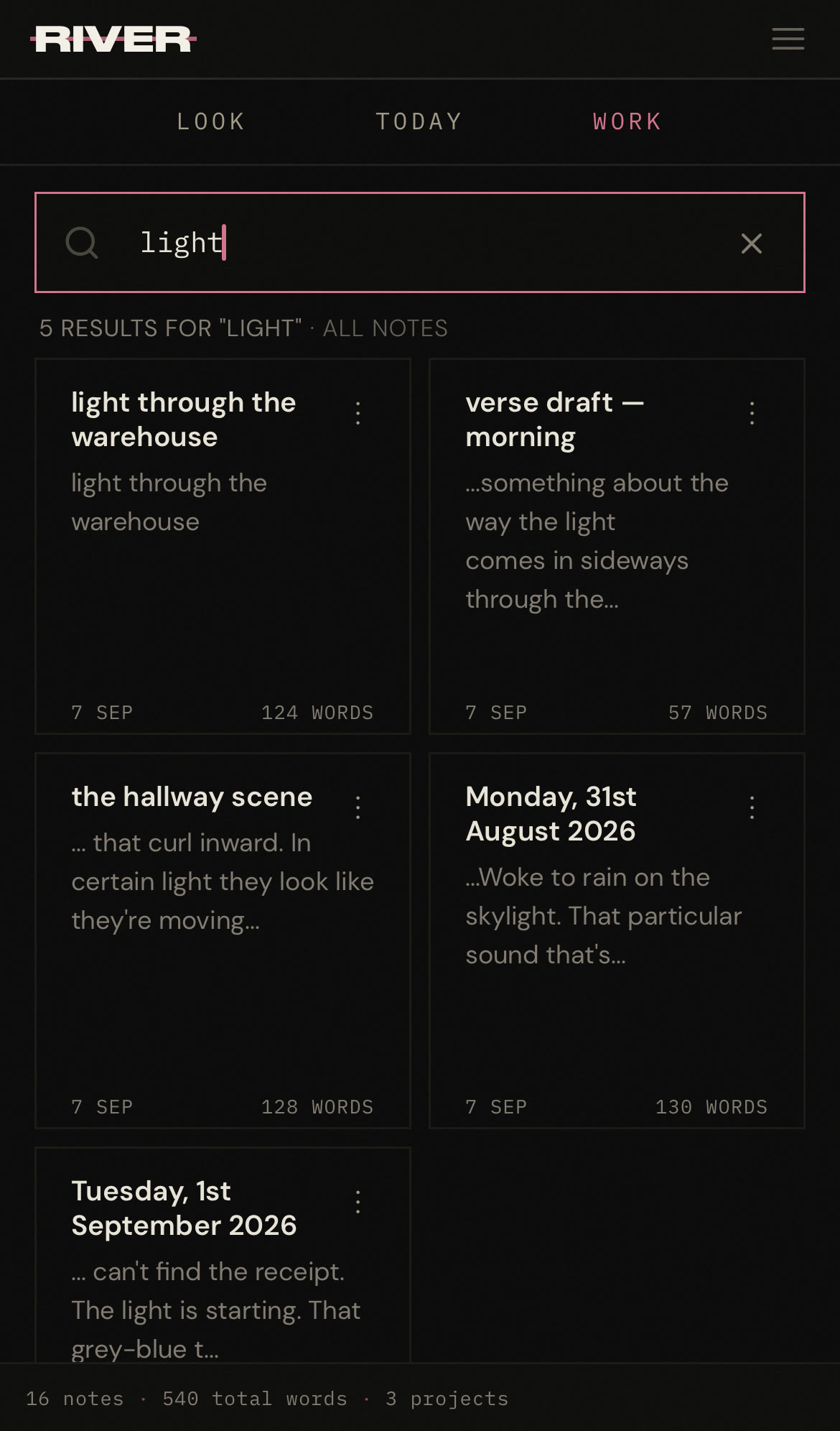
Type a word you remember into search in Work. Notes and days that hold it appear as you type, with the passage showing; open one to return to it.
Work with light typed into search: five results, each a note with the matching passage shown — light through the warehouse, verse draft — morning, the hallway scene, and two days from the week before.